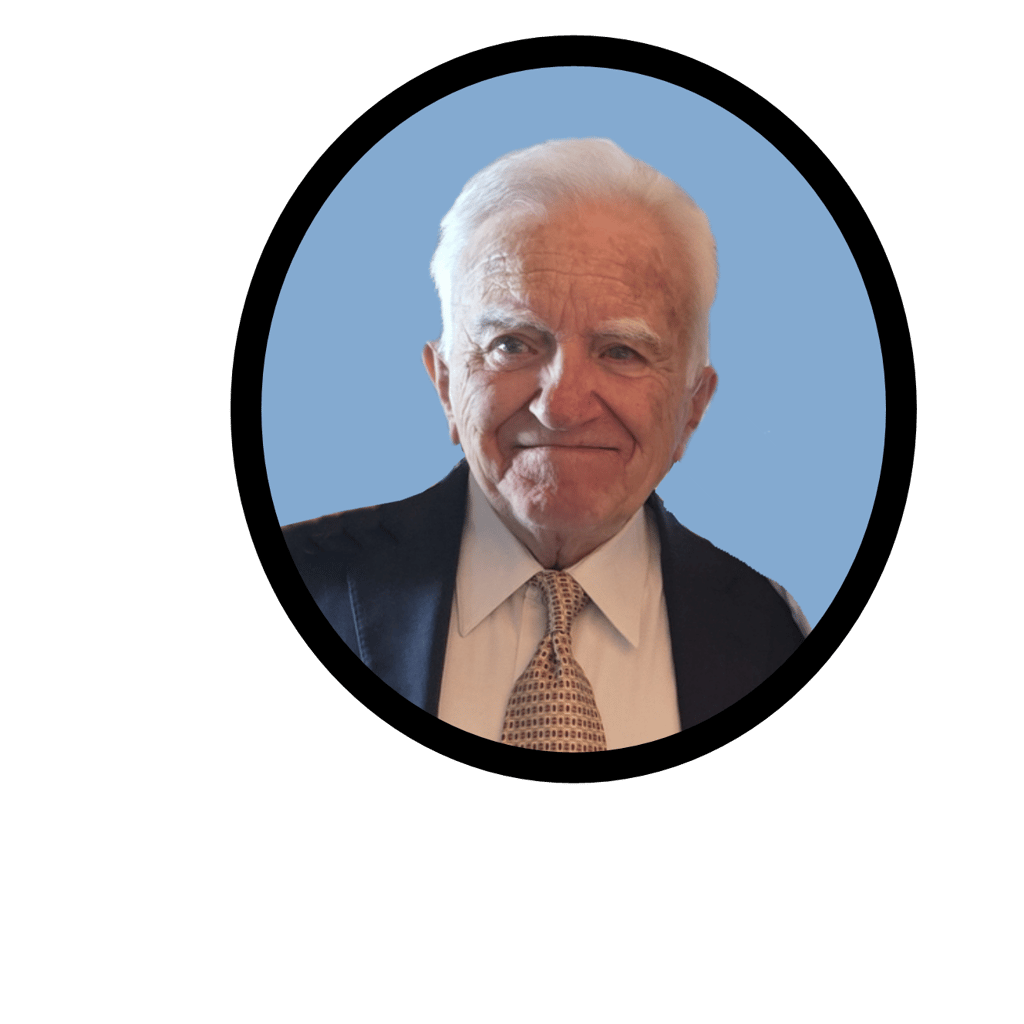
The Miracle and Magic of Identical Twins
A True Story of Alberto and Giovanni Vincenti: The Magical Connection of Identical Twins is Lifelong
Everything that follows is an account drawn from the memory of Alberto and Giovanni Vincenti.
Born: Haifa, Palestine, 07/07/1934
History of the Family
Our father, Giulio Vincenti, was an only son, after having lost his young sister Adelaide, a loss which affected him deeply. Giulio's mother, Rahmi, was not a particularly healthy woman but was determined to find a good wife for her son before passing away, so as to keep the family name and heritage intact.
Giulio was Catholic and they could not find the right woman from the congregation. One day, a friend of Rahmi told her that she had found what she thought to be a good candidate to be Giulio's wife. The girl's name was Alice Bahu, a Greek Orthodox girl from a good family. Unfortunately Alice was already engaged to a young Palestinian lawyer, so they were forced to settle for their second choice, Salma Bahu, Alice's younger sister.
Giulio, the following Sunday, went to the Greek Orthodox church, saw Salma and immediately approved the choice. Soon after that, they got married. Marrying Salma would later turn out to be the best thing Giulio would ever do in his life. They married in Haifa around 1928.
To please Rahmi, Giulio and Salma gave birth to Giuseppe, Oreste, Elio, then the twins Alberto and Giovanni, and finally a girl, Adelaide, in 1938.
Life was comfortable for the whole family. We lived in a two-story villa that Giulio's father had built. On the ground floor, two shops were being let.
In 1940 Italy declared war on England and France and joined the Axis. The whole family was placed under house arrest and later deported to concentration camps, first in Kenya and then in Uganda. During this period Salma quickly matured and her strength, common sense and luck, qualities that defined her, blossomed. She was also well versed in English, as she had studied in the American College for Girls in Beirut. All of this allowed her to take excellent care of her children in this difficult situation.
In 1944 the war ended and we returned to Palestine, to our family home. During our detention in the concentration camps, our British captors treated us fairly, except that they confiscated all our property as enemy property, apart from our home.
In late 1947 the situation in Palestine grew worse. Then in 1948 the United Nations' security council approved the creation of the State of Israel. Friends on both the Arab and Jewish sides suggested to my mother and father that it was time to take the family out before things became explosive. So we went to Beirut, where Salma's brother Salim, who had graduated from AUB, received us in his big villa for a short period. Once it became clear that there was no chance of returning to Palestine, Lebanon became our home.
Lebanon was a gorgeous country: the weather was mild, the sea was beautiful and the mountains were majestic. Lebanese food is one of the best cuisines in the world.
Growing Up
For a time we stayed at the home of Uncle Salim in Beirut. Once we realised there was no chance of returning to Palestine, we began looking for a small apartment we could afford. We were lucky that there was an Italian school run by the Salesiani. The twins registered there at once. The school was small, which made it informal and helped students and staff get to know one another.
Here we spent several years. Most of our free time was spent playing football. It was there that the twins realised there was some magic in their connection, because each pass they exchanged found its mark. The Salesian school started taking part in inter-school competitions. As the years went by, our chemistry steadily improved.
Two years before graduation, the Salesian school announced it would be closing down at the end of the year. Alberto and Giovanni were in a bind, but we had a clear idea of what we wanted to do: our objective was to get into the American University of Beirut (AUB). The surest way of getting into AUB was to go through their high school, International College.
There was one problem: the twins did not know enough English to enrol.
Here stepped in Salma's famous luck. There was a family friend, Zicki, who spoke excellent English and was completely free that summer. Zicki would give us English lessons every day for two hours, six days per week.
That summer was brutally hot and humid, so in the afternoon, several times a week, we would walk from our apartment to the beach. This would take around an hour. We would get to the rocky beach, which was open, and jump into the sea to cool off.
Giuseppe, our oldest brother, who worked fifteen hours a day, six days a week, to maintain our large family, had never taken the time to go to the sea. One hot Sunday, Alberto and I pressured Giuseppe to take a day off and come with us for a swim. Once we had arrived we explained to Giuseppe that we would be swimming in the strip of water running between two big rocks. We also explained to him how to swim. If he started struggling to stay afloat, he was to put his hands on our shoulders, one on each of ours, so that we could ferry him to the other side. The distance between the rocks was about eight to ten metres. However, we did not mention to Giuseppe the depth of the water nor the fact that there might be waves.
When we were more or less at the center point between the two rocks, a big wave hit us. Alberto and I just went up with the wave while Giuseppe got hit smack in the face by it and started to panic, flailing around and sinking. Alberto noticed this and tried to pull Giuseppe up, but Giuseppe grabbed on to his neck. When I saw them I also tried to pull them up but suffered the same fate as Alberto. Now Giuseppe had a firm grip on both of our necks, which made it hard for the three of us to stay afloat, as Giuseppe was so much bigger than us.
Alberto and I were good swimmers and had the wherewithal to not open our mouths when we went underwater. It was not so for Giuseppe, who was drinking a lot of seawater. Giuseppe was quickly losing strength. Alberto and I grabbed his arms, pinned them behind his back, pushed him to the rocks and pulled him up onto them.
Giuseppe was in a terrible state and as soon as we started massaging his back he started vomiting seawater, a lot of it. After forty-five minutes we decided to head back home. This was a slow endeavour, as we needed to support our brother on both sides. The whole trip took us around two hours.
We told Giuseppe to be quiet and we entered the house stealthily so as not to alert our mother. Once Giuseppe had reached his room he just dropped onto the bed fully dressed. Our mother came into the room and saw the state Giuseppe was in. She quietly undressed him and covered him with the bedsheet. She sat at the foot of the bed until morning, while we would peek into the room every hour to see what was going on.
In the morning Oreste helped Giuseppe to get dressed and they both went to work as usual. We ran out of the house to attend our English lesson.
The Movies and the Machine
Zicki spoke to Giuseppe that summer and told him that while the twins' English had improved considerably, their comprehension and conversation still needed work. Since Giuseppe was in the business of film distribution in Beirut, Zicki suggested he get us two tickets every week to an American movie, so that we could hear English spoken naturally.
Giuseppe quickly obliged. Every week he would bring us two tickets, and most of the films were Westerns. Often, when a film was particularly good, he managed to get us four tickets so we could see it twice. We enjoyed those movies enormously.
Most of the tickets were for the matinée, from three to six o'clock. We had just enough money to take a service, not quite a taxi but more like a small bus that ran a fixed route up and down from the center to near our home. Alternatively, we could take the tram from downtown Beirut to AUB and walk the remaining ten minutes home.
Alberto and I discovered that halfway between downtown and our house, on the walking route, there was a shop called Automatik. The shop was famous for its gelato italiano. The name came from the idea that you walked in and they served you immediately, automatico. Alberto and I became good friends with the young man who served the ice cream. He was probably twenty or twenty-five, a little older than us, and since he saw us once or twice a week, he took a liking to us and started giving us bigger scoops.
Toward the end of the summer, one day we walked into Automatik and got a shock. The little shop was cool inside while the air outside was hot and suffocatingly humid. We asked our friend behind the counter what had changed. He led us around the counter to the back wall of the shop and pointed. There, incastrated in the wall, was a rectangular machine. Alberto and I stared at it, dumbfounded.
It was a room air conditioner. We pressed our faces close to the front grill. The only things we could make out were a fan, a filter at the bottom, and a motor behind. On the machine was written one word: Carrier, the name of the American who had invented air conditioning.
Alberto and I were stunned. A machine that could supply cold air day and night, day after day. It seemed impossible. We could understand heat. Electric wires glow red and give off warmth. But cold? That night I could barely sleep. For two or three days the question consumed me. How could a motor, a fan, and a little filter behind a grille in the wall produce cold air twenty-four hours a day? It was beyond our imagination, beyond our knowledge, beyond everything we could think of.
Two or three days later we went to the movies again and stopped at Automatik afterwards. We held our hands in front of the little rectangular machine. Cold air poured out. It was hard to believe. Our friend behind the counter told us it was a technological invention. But he could not explain how it worked either. The machine had been installed just that week.
After about ten days of obsessing, something changed in me. Our mother and father had always wanted me to become a mechanical engineer, like our grandfather Giovanni, whose name I carry. They pushed me toward engineering, but I had never felt I had an engineering mind. What I did have was curiosity, an incredible, relentless curiosity. Something like that air conditioner would not let me sleep for days and even weeks.
One morning, after yet another sleepless night, I woke up with a certainty I had never felt before. I told Alberto I was going to study to become a mechanical engineer specialised in air conditioning. That was the moment I decided what I would do with my life. Something new, something great, a machine that could change the way people lived. People in the desert could now live comfortably. What an incredible invention.
Alberto, meanwhile, had long been set on becoming a doctor. He was so convincing in the way he spoke about medicine that our friends already called him Dottore, even though we had not yet finished high school. He had read an article about Doctors Without Borders, probably ten times over. He called them the angels of humanity: people who left their homes, their children, and their wives and went around the world to cure and teach. Alberto wanted to be one of them.
For months I had envied him. He knew exactly what he wanted to do, while I had nothing, just my parents' wish that I become an engineer because of our grandfather. But now, with the room air conditioner, everything changed. By the end of that summer, I was convinced. I started telling my friends I was going to become a mechanical engineer in air conditioning. They laughed at me. I had never talked about such things before.
International College
At the end of summer, Alberto and I went to International College and sat for an English comprehension exam, since the Salesian school had taught English only an hour a week. We both passed with good marks and were registered to enter the third year of high school, with the first two years having been completed at the Salesian school.
International College was an American school. Everything was taught in English. The teachers were American nationals or of mixed American-Lebanese origin, and most were specialists in the English language. It was a different world from the Salesians, big classes, sometimes over a hundred and fifty students spread across multiple sections. Coming from a school of fifteen or twenty per class, it was a shock, but one we welcomed. Alberto and I loved it, because for the first time we knew exactly what we wanted to do. We were obsessed.
Zicki continued to guide us. He pushed us to read voraciously, David Copperfield and many other books by American authors. He would ask us every week what we were reading.
Alberto would read one book, I another, and then we would swap. We could now borrow from the International College library or from AUB's. Between the cowboy films and the reading, our English improved enormously. By then we had seen practically every Western the United States had ever made.
Third year passed well. Alberto had excellent grades, particularly in chemistry and biology, where he was exceptional. I was slightly better in maths and science. On average we were just about head to head, separated by less than half a percentage point.
Many of our friends who wanted to become engineers dismissed air conditioning as a toy, nothing serious. I would argue with them, even fight. It was not a toy. It was an invention that would open the world, people who lived in the desert could now live comfortably. But most of them did not agree with me.
That following summer, before our final year of high school, we took it easy. We played a lot of football, went swimming often, and read constantly. We knew the next year would mean university, and we had heard how tough AUB could be. The American University of Beirut had an excellent reputation, probably one of the best American universities outside the United States, and its most famous faculty was the School of Medicine. Getting in required being the very best.
We studied hard in our final year. Our grades improved significantly and we finished in the top ten percent of our class. All of us, the six brothers and our sister Adelaide, shared a similar attitude inherited from our mother: we were not driven by money. From Giuseppe to Oreste to Flavio, we were driven by a desire to become famous, not in the sense of celebrity, but in the sense of being the best at what we do. Our mother had installed this inside all of us, and it was more important to us than money or anything else. She also believed deeply in luck. Life without luck, she used to say, you can never succeed, never reach the point where you want to go.
At commencement, the president of International College called the students alphabetically to receive their diplomas. When he reached the letter V, near the very end, he paused. He told the audience that in all his years he could not recall identical twins graduating on the same day with nearly identical grades. He called Alberto Vincenti first, then Giovanni Vincenti. One of us stood up on the left side of the hall, the other on the right, and we were handed our certificates together. Everybody clapped. We were proud of that moment.
The Mountains of Lebanon
Immediately after graduation, a group of seven or eight of us decided to go hiking in the mountains. We had grown up in Beirut and knew almost nothing of the country beyond the city. We packed backpacks and small tents, so small that our legs stuck out, since there were too many of us and not enough space, but at least our heads were covered.
Among us was Stefo, who wanted to become an agricultural engineer. He had read about chicken farming and was determined to bring modern poultry technology to Lebanon. At that time chicken was enormously expensive, you might eat it once a month if you were lucky. Eggs too were very pricy; our father, who loved eggs, could only afford one each morning. Stefo declared he was going to bring the price down to less than half. We all cheered. We did not entirely believe him, but we were happy because we all loved chicken.
Alberto and I were the only foreigners in the group. The rest were Lebanese, Palestinian, and Syrian. Many Syrians came to study in Lebanon at the time, because the schools were among the best in the region.
We took a bus up to Aley, the first big town at the foot of the mountains, and from there we walked, one behind the other, singing American songs, Italian songs, Lebanese songs. In every village we passed through, the children came running. They had never seen a group of young students from Beirut marching through with backpacks, singing. They gathered around us and asked what we were going to study. Alberto would say he was going to be a doctor. I would say I was going to be an engineer in air conditioning, that I was going to change how people live. Stefo would say he was going to make chicken so cheap everyone could eat it. And every time one of us named his profession, a child would declare they wanted to do the same thing.
Their mothers always prepared lemonade, Lebanese bread with labneh, a kind of ricotta or white cheese, and apples, since that part of the country was all orchards. The children jumped around us, asking questions, thrilled to see young people from Beirut, the most cosmopolitan city in Lebanon, speaking to them about their futures.
Lebanon is such a beautiful country. The people's hospitality is hard to put into words. The French called it the bijou of the Middle East, a jewel. The pine forests covered all the mountains. Three times that summer we went up into the highlands, spending seven or eight days each time, then coming down to recharge and plan a different route. Every place we visited, the warmth of the people astonished us.
Freshman Year
We registered at once at AUB, Alberto for pre-med, Giovanni for mechanical engineering. Freshman year brought the first real shocks.
Alberto went to the School of Medicine to gather information and came back shaken. He would have to spend four years in pre-med before being considered for admission. The selection process was ruthless: Lebanese students were chosen first, then Palestinians and Syrians, then other Arab nationalities, and last of all, foreigners. The Vincenti twins, despite their mother being Palestinian and being all born in Palestine, were registered on our father's Italian passport. We were considered foreigners, the very last to be chosen.
Our mother contacted Dr. Haddad, a Palestinian doctor and close family friend, who asked about Alberto's grades. When he heard them he said it was going to be very tough. The chances were poor. But he advised Alberto to improve his grades steadily every year and to take on charity work, anything that would show the admissions committee he was more than a student seeking a degree and that he genuinely cared about people.
We discovered that the university newspaper needed someone to handle its Friday distribution, placing copies at every gate, collecting the small payments in little piggy banks, then bringing everything back to the office. It was unpaid work, essentially charity, exactly what Alberto needed on his record. He took the job gladly.
There was a problem, however. Every Friday Alberto had his third weekly hour of General Education, a broad course about the world beyond your own field, and he could not be in two places at once. So I went in his place. Nobody could tell us apart. I would sit in his seat and take careful notes. This went on for weeks, until a journalism student somehow discovered the switch and wrote it up as a scoop in the university paper.
The following Friday the teacher, a small, elderly American woman, kept looking at me over her glasses throughout the lecture. At the end of class she asked me to come to her office. She wanted to know if I was Alberto or Giovanni. I had already made up my mind not to lie. I told her I was Giovanni and explained everything: Alberto's dream, the near-impossible odds for an Italian passport-holder, the charity work, the newspaper. She listened, told me she understood, but said it was against the rules of the university and made me promise never to do it again. I promised and walked out, sad, but not embarrassed. I had been expecting it, and I had told the truth.
We came up with a simple solution. Alberto returned to the Friday class and I took over the newspaper distribution. The press needed someone to do it free of charge, whether it was Alberto or Giovanni made no difference to anyone.
South Dakota
My own path hit a wall at the end of the second year. At that time AUB did not have a mechanical engineering department. They offered civil engineering, electrical engineering, and architecture, but for mechanical engineering the department was still being built, perhaps two or three years away. My advisor suggested I change my major.
I refused. I wanted air conditioning. I had no interest in electrical engineering. I could not even change a light bulb.
Throughout our twenty-one years together, Alberto and I had never once had a real fight or serious disagreement. We had a private code word between us: shadow. He was my shadow, I was his. Whenever one of us needed to dodge a question, we would say we had to ask Shadow. Nobody else ever knew who Shadow was.
Alberto pushed me in the right direction, as he always did. And then I found my answer through a young teacher in the School of Agriculture, a recent arrival from South Dakota. He told me about South Dakota State University in Brookings, a small school with a solid engineering programme that included mechanical engineering, and the cheapest university I would find anywhere in the United States. He gave me the address, the name of the Dean of Engineering, and offered to write a letter of recommendation.
I told our mother I had no choice. I had to go to the United States. There was no other way for me to become an air conditioning engineer. It was an enormous proposition. I had never left Lebanon. I did not even know Italy. At that time there were no direct flights, one had to go by ship, a journey of weeks. But I was determined.
Our mother, as always, was extraordinary. She convinced Giuseppe and Oreste that there was no alternative. Giuseppe helped write to the university, enclosing my high school certificate and university transcripts. Weeks passed before a reply arrived. The mail travelled by small planes hopping from Beirut to Greece to Italy to Spain. When the letter finally came, the news was remarkable: South Dakota State University had never had an Italian student. My recommendation was so strong, and my grades acceptable enough, that they would admit me into the third year of engineering. Because I would be their first European engineering student, they offered a $300 scholarship, with an additional $200 if I maintained a B average or above. The university was now within reach.
Departure
Giuseppe, who regularly travelled to Italy for business, knew the shipping routes well. He arranged passage on the Esperia, a ship that ran regularly between Beirut and Naples.
Because I was a student, the captain offered me a fifty percent discount, but no cabin. I would sleep on deck, on a large reclining chair, with a covered roof above and a bathroom behind. It was only seven days. After our mountain camping trips, it was nothing.
From Naples I would board an American ship, the Constitution, bound for New York. Again, Giuseppe negotiated a fifty percent student discount, third class, which meant a proper room, meals, and a bed.
On the day of departure the whole family came to the port. I had a suitcase, not a modern one, something like hardened cardboard, and a paper bag with seven days' worth of food. Everyone was crying. The last one to embrace me was Alberto. He told me he was going to miss his shadow. He still had two more years of pre-med ahead of him before learning whether he would be accepted into the School of Medicine.
Our mother, with her tremendous faith, was unshakeable. She told me I was in the hands of the Madonna, that she had prayed and been assured I would be taken care of. She told me not to be afraid and to go.
The Esperia sailed from Beirut to Alexandria, where we were supposed to stop for six hours to buy provisions. But we could barely dock for an hour, the winds of war were blowing. The British and French were plotting with Israel to seize the Suez Canal from Nasser. From the ship we could see their warships, about ten kilometres off Alexandria. Days later, they would attack. We continued to Athens, stopped briefly, and arrived in Naples.
I stayed at the small hotel Giuseppe always used, just outside the port, and gave my remaining food to some children nearby. I would not need it anymore, since third class on the Constitution included meals.
That evening I followed my mother's advice: before you enter a restaurant, look. If everyone is happy, talking and eating, it is a good place. If it is empty and quiet, do not set foot inside. I walked down to the roundabout near the port. Through a glass window I saw a man tossing dough into the air, spinning it, then spreading something red and something white on top. The smell was extraordinary. I asked him what he was making. Pizza, he said. I had never seen pizza before in my life. I went inside, the place was packed, everyone talking, eating, drinking wine or beer, and ordered a Margherita with a glass of red wine. It was delicious. After seven days of dry bread on the Esperia, I ate it like a lion.
The next morning I boarded the Constitution. Third class was perfectly comfortable: a shared room with three other men and a buffet dinner where you could eat as much as you wanted. The only problem was the snoring. My three roommates produced a tremendous orchestra every night. My hearing had never been perfect, which helped. On the first night I decided there was only one solution: join the orchestra. I closed my eyes, started snoring along with them, and fell asleep.
After roughly two weeks at sea, the captain announced that the Statue of Liberty was visible on the left side. Everyone rushed to look. There she stood, enormous, magnificent.
Everyone clapped. I went below, prepared my suitcase, and joined the immigration line. With an Italian passport and a student visa, it was quick and simple.
At the Greyhound station in New York, a man with a long beard saw me sweating with my cardboard suitcase and asked where I was going. When I told him South Dakota, he looked at me in disbelief and warned me that the cowboys and Indians were still fighting out there. I told him that was the best news I had heard, I had learned English from the cowboys and Indians. I spent one night at the YMCA and prepared for the journey west, into the heart of America and toward the machine that had kept me awake all those years before in a little ice cream shop called Automatik.
Brookings
Life in South Dakota was hard because the winters were extremely cold. The temperatures could sometimes reach minus thirty degrees centigrade. It was hard to imagine. I had just come from Beirut and did not even have a coat. Every day the temperature dropped further.
I was renting a room from a little old lady close to the university. It was a small university with two branches: the School of Agriculture, since South Dakota is a heavily agricultural state, and a small engineering school. There were about twenty foreign students and a club for them. I was the only European, Giovanni Vincenti. They all called me Gino, because Giovanni was too long a name.
The landlady used to complain that I used too much hot water. I told her I was not using it for a bath, I was using it to defrost. When I went outside and came back I was frozen from top to bottom. I would jump into boiling water and slowly, slowly get my circulation back.
She always laughed at me. But she was a nice little old lady.
I liked to work in the library because there I had access to newspapers and magazines and could read about what was going on around the world. And what was going on around the world was getting worse every year, worse than the previous.
Summer in Chicago
When summer came, about fifteen foreign students, mostly from the Middle East, went to Chicago because there were supposed to be lots of jobs there. In reality there were not that many, especially for foreign students. The best you could get was one dollar an hour. Some of the boys became garbage collectors, others street cleaners, some washed dishes in restaurants. I came from a proud family and I refused to do such jobs.
After a few days I ran out of money. I tried selling Bibles door to door, then encyclopaedias, then suitcases full of women's underwear, slips, brassieres, nightgowns. They always told you that you could make good money selling this way. You would go door to door in the five- and six-storey buildings of Chicago, ring the doorman, and most of the time they told you to go away. Occasionally a little old lady would let you in, open your suitcase, admire the colours, try things on, and offer you a glass of beer and a sandwich with peanut butter,
my first taste of peanut butter. Then she would take you by the arm to the bedroom. It was a horrible, terrible feeling. It was the first time I had been in bed with a woman. I could not take it. For a whole day's work, three dollars in commission. The encyclopaedias were the same, two sold in a day, three or four dollars, working in the summer heat with a suitcase, door to door, door to door.
We were all staying in a building full of rooms, like a dormitory. Each of us had a room, and at the end of each floor there was a shared bathroom, six or seven rooms per floor. We paid cash. There were no credit cards. We each had about ten dollars total and made three, four, five dollars a day from whatever odd jobs we could find. We were all from the same university, agriculture students, electrical engineers, mechanical engineers, all technical people, all broke.
Then, on the fourth day in Chicago, one of our group came in upset, cursing and shouting. He had come close to getting a good job at a small engineering company called Nachman and Associates. They had asked him at the very end of the interview whether he knew how to type. He did not, and they turned him away. He could have learned in a week.
When I heard this, I thought: this is the opportunity. I got the name of the company. I remembered there was a pawn shop about two blocks from our building. I went in and asked if they had a typewriter. They had a small Royal portable with a case and a little instruction booklet. Five dollars a week to rent, but fifteen dollars down as a deposit. I did not have fifteen dollars, I had no more than a couple of dollars in my pocket. I told the man I was a student and offered him my passport as security. He agreed, but for one week only. I gave him my name and address, he took my passport, and I carried the typewriter home. I started that night with the booklet, where to place your fingers, how to memorise the keys, and practised until two o'clock in the morning.
The next morning I took the metro to the Loop, the centre of Chicago. I found the building, went up to the third floor, and arrived at the office at twenty past eight. It was closed. I sat and waited. Five or ten minutes later a man came up the stairs, looked at me, and asked if he could help. It was Mr. Nachman himself. I jumped up and shook his hand. I told him my name was Gino, that I was a third-year mechanical engineering student, and that I had heard he was looking for a student for the summer.
He invited me in. It was an open-plan office with his cubicle in one corner. We sat down and he asked me about myself, where I came from, what I wanted to do, why I was there. I was polite, as always. He told me he had two sons, one of them just about my age, studying first-year engineering. At the end he said he liked me and thought I was the right person.
But then came the question: did I know how to type?
I flashed the Vincenti smile. I told him that today all students at the university knew how to type. He said that was not true, he had had three candidates come through and none of them could type. He took me to his secretary's desk, where she had a big typewriter, and told me to type something. I sat down, placed my fingers, and slowly pecked out: G-I-O-V-A-N-N-I V-I-N-C-E-N-T-I. I pulled the paper out and handed it to him. He knew perfectly well I could not type. But he could see how determined I was. I told him I was a little rusty, but that in twenty-four hours I would become an expert typist. He called his secretary over and told her that Gino was going to work for them that summer.
There was a small desk in one corner of the office. That was mine. The office had about six or seven engineers and draftsmen, plus the secretary. I did everything, took out the rubbish, made photocopies, ran errands. If somebody needed a drawing copied, I did it. I was always the first person to arrive in the morning, waiting at the door for Mr. Nachman to open up. I was always the last to leave, walking out with him when he locked up.
On the first day I went to the secretary and told her I needed a small advance on my salary to pay for my room and metro fare. She gave me a piece of paper and I signed for fifty dollars. I had never seen a fifty-dollar bill before. I had seen fives, but not a fifty. I checked the zero very carefully, put the bill in my pocket, kept my hand wrapped around it all the way home on the metro, and stopped at a big supermarket. I bought two or three packages of spaghetti, some ready-made tomato sauce, and a jug of red wine.
It was so hot that summer that people could not bear to stay in their rooms. In the evenings they would sit on the front steps of the building, trying to catch a little cool air from the street. They saw me coming with two brown bags, one on each arm, and the jug of red wine dangling from one finger. They shouted that Gino was coming. Four or five of them ran over to help me carry
everything to my room. I told them I had found a fantastic job and that we were going to celebrate.
Nobody had a big pot for spaghetti, so each man filled his own small pot with water and boiled his own portion. Everyone had a glass for wine. We ate and drank and talked. Then the fellow who had given me the tip about the job walked in. He wanted to know what was going on. The boys told him Gino had found a fantastic job. They told him to get his pot and his glass. He boiled some spaghetti, poured some wine, and asked what kind of job I had got. When I told him it was Nachman and Associates, his face went red. He accused me of lying to Mr. Nachman, of pretending I could type. I told him I had not lied. The difference, I said, looking him in the eyes, was that yesterday I did not know how to type, but today I had learned. I took five dollars from my pocket and gave it to him, thanking him for the tip. He was furious, red all over, but he took the five dollars, put it in his pocket, and had another glass of wine. After that we all forgot about it.
That night I went back to the typewriter, and for the rest of the week I practised every night until two in the morning. At the end of the week I returned the typewriter to the pawn shop, paid what I owed, and got my passport back.
At the end of the first month, the secretary prepared the pay envelopes for everyone. She called each person's name, Mr. Nachman signed, and the envelopes went out. Everyone got theirs except me. Mr. Nachman realised he had forgotten. He said that in all the rush, they had never discussed my salary. We were the last two in the office, as usual. I flashed the Vincenti smile again and told him that he had two children, one of them about my age, so surely he would understand. As a foreign student I had to pay about three times the tuition of a local student. It was not fair, but it was the law. He looked at me and said he was going to make an exception. He would pay me like a graduate engineer: three hundred and seventy dollars a month. I practically fell off my chair. He admitted he had probably made a mistake, but told me to leave it at that.
I spent the rest of the summer doing my job well, and at the end the engineers in the office took me out for a last lunch. The next day I went back to South Dakota with the group for my final year.
Graduation
I graduated and became an engineer. I asked around about the best place to find work, and most people said Minneapolis, Minnesota, the closest big city to South Dakota: medium-sized, with plenty of jobs and nice people.
While working in the library I spotted an advertisement: an old man who could no longer drive was selling his car, a Model T Ford, well taken care of, for seventy-five dollars. I did not have seventy-five. I had about sixty-five. I called the man and arranged to meet him at the police station. He was an old man with a beard. The car was beautiful. I told him that I was graduating in a few days and moving to Minneapolis, that I needed to keep some money for fuel and one last week's rent, and that the most I could pay was fifty dollars. He looked at me, said he had a grandson my age, and accepted.
He asked me if I knew how to drive. I told him I had never driven in my life. He said the nice thing about this car was that it was very easy. One, two, three: you start in first gear, then slowly into second, and when you are going thirty or forty miles an hour, you put it in third and the car flies. I sat in the driver's seat, he sat beside me, and we went around the block twice. He said I was doing well. Then he asked if I had a driving licence. I did not. Brookings was a small university town and the police knew the students well. We went to the police station. The officer asked me what colour this was and what colour that was, red and green. He said my eyesight was good, charged me two dollars, took my photograph, and I had a driving licence.
On graduation day I could not afford to rent the special hat for the ceremony, so a friend lent me his for a photograph. I sent the picture to my family and to Alberto. The next Sunday morning, early, I jumped in the car and drove to Minneapolis.
Minneapolis
Minneapolis was a beautiful city, full of the nicest people I had ever met in the United States. It was a center for banking and insurance in the Midwest and full of beautiful blonde women.
On my first Thursday in the city I was sitting in a small coffee shop looking at the job advertisements in the newspaper, asking the waiter about the different streets and avenues. A well-dressed, conservative-looking woman at the next table overheard my questions and offered to help. We started talking. She wanted to know where I came from, how I had got there. I told her my story, Lebanon, the ships, the Greyhound bus, the whole journey. She loved stories and could not stop listening. She wanted to know what kind of job I was looking for. I told her I was a mechanical engineer, just graduated. She was impressed. I told her I was not really smart, just a hard worker.
She asked if I had celebrated my graduation. I told her not really, at the end of the year we were all broke. She invited me to dinner to celebrate. I tried to refuse, but she insisted. She asked if I liked pizza. I told her I was Italian and that I had only ever had pizza once before, in Naples. We went to her favourite pizza place. She ordered one large enough for two and I had my first cold Coca-Cola with pizza, in that heat, starving, it was like champagne.
Her name was Mary Lou. The following day she met me again at the same coffee shop and brought me a present, a brand-new Arrow shirt, a graduation gift. She told me that with the shirt I was wearing, I would never find an engineering job. She was right.
She was one of the gentlest and most helpful people I ever met, and she came into my life at exactly the right time.
The next day there was a big advertisement in the paper. An air conditioning company that made fan coil units was looking for a young mechanical engineer to develop a new line of air handling units. I could not believe it. I asked Mary Lou how to get there, about fifty minutes by car. The next morning I was at the office at seven o'clock, wearing my new Arrow shirt. The office was closed. I waited about twenty minutes until a little old lady arrived and opened the door. She was the secretary. She offered me a cup of coffee and a box of doughnuts, my first doughnuts. I picked chocolate, of course. I had just swallowed it with my second cup of coffee when the boss walked in.
He took me to his corner of the open-plan office and I showed him my certificate. He explained that the company made fan coil units and now wanted to expand into air handling units. He asked if I thought I was capable of designing one. I looked at him and said yes, of course, I was an engineer. He liked my straightforwardness. He asked when I could start. I told him I could start today. He called the secretary over and told her Gino was starting immediately.
I was given a small desk at one end of the office with a shelf of reference catalogues behind it. I pulled out the Carrier catalogue, then Trane, then York. Air handling units were nothing mysterious, a fan, a motor, coils, and a filter. I studied the three catalogues thoroughly. I worked out where each company's line overlapped and where the gaps were, and designed a product line that was more complete than any of theirs individually, yet modest enough for a small company just starting out. I proposed taking just over half the total range to begin with, with the rest to follow in a year or so.
Ten days later I presented the plan to the owner, two sales engineers, and the chief engineer. They all approved it. I had the feeling they did not know much more about air handling units than I did. They had never made one before, and neither had I. But the catalogues of the three major companies contained everything you needed to know.
The head of the factory, a man of about fifty, was brought in to discuss manufacturing. I told him honestly that I was poor at building things with my hands, but good at designing and knowing exactly what needed to be done. He said not to worry, I should show him the drawings and he would build it all himself. He treated me like a son. We designed the first unit together, built the prototype, and painted it up beautifully. The company wanted it ready for the ASHRAE fair (HVAC Exhibition) in six months.
The Visa
Then I received a letter from the immigration office. It congratulated me on becoming an engineer and reminded me that my visa expired twelve months after the date of my graduation. I had to leave the country. As a student visa holder I could not simply switch to a working visa, I would have to leave, apply from abroad, and re-enter. I did not want to leave. I felt my experience was still too limited.
Mary Lou suggested I go back to university for graduate school, which would renew my student status. It was an excellent idea. But I was finished with the Midwest and its brutal winters. I did not want to stay in Chicago either, three of our group had been beaten up by a gang while walking along the lake, one of them losing all his front teeth. I had always been afraid to walk at night there. In Minneapolis I had felt much at ease and had never had any problems, but the winters were just as brutal.
Mary Lou told me that if I went west, the climate would be much nicer: Oregon, Washington, Idaho. They were big states with small populations, nice people, and several universities.
The first to answer my application was the University of Washington in Seattle. Washington was called the Green State, full of mountains and lakes. The university was large, about twenty-five thousand students, and well funded because of Boeing, the biggest aircraft company in the world at that time.
Boeing was growing fast. The 707 had just been released, a huge plane that nobody believed would fly when they first saw it. The company was developing the 727, a three-engined plane, to compete with the British Trident. They needed engineers and scientists desperately. The university had a tremendous atmosphere of knowledge, full of young people from all over the world, British, French, German, Dutch, drawn by this brand-new technology. The jet age.
Because I was registered as Italian, because they had never had an Italian engineer at the University of Washington, and because I was technically a refugee, they accepted me readily. We had left Palestine with nothing, the whole family, nine people. I hated the word refugee. We grew up in a very ambitious family. We wanted to be famous, thanks to our mother. The label did not fit. But when it helped, we used it.
Danielle
In graduate school, all mechanical engineering students had to take an advanced mathematics course. In that class there was a young woman who spoke English with the most beautiful French accent I had ever heard. Her name was Danielle Duron. She came from Paris, an exchange student studying graduate mathematics, a brilliant mathematician. Since both of us were European, we quickly became friends. She was not a beauty in the conventional sense, but she had a gentle way of speaking that attracted me.
Something about me reminded Danielle of her father. He was a professor of mathematics in Paris, just about my size, full of ideas, and he loved to talk, philosophy in his case, politics in mine. Sometimes she would hug me simply because I reminded her of him. She loved her father dearly. In a way, he was the only man in her world, and she was his only child.
Then one day Danielle came in crying. She had received a letter from her father. Her mother, worn out by the loneliness of being married to a man who was always at the university, always absorbed in philosophical things, always coming home late, had decided to divorce him. Her father, who had never cooked, never cleaned, never done anything at home, was now living in a shipwreck of a house. Danielle felt horrible, as though she had abandoned him when he needed her most. She decided to resign from the university and go back to Paris to take care of him. Even though everything was paid for through the exchange programme, she could not study any longer. She left.
Graduate School and Boeing
Graduate school at the University of Washington was a lot of hard work, a year and a half of coursework. Then it was time to write my thesis. Out of nowhere I came up with the idea of writing it on solar energy. I told my advisor that we were using more and more energy every year and would eventually run out of fuel. Solar energy was the future. He was very excited. At that time, not a single student at the University of Washington had ever done any work on solar energy. I was the first. There was not a single document, paper, or book on the subject in the entire library, and it was a big library, richly funded thanks to Boeing and government contracts.
Just before graduation I had an interview with Boeing's special personnel team, who recruited graduate students. The interviewer asked what my thesis was about. When I told him my thesis was on solar energy, he looked at me with interest and said it was a brilliant idea. He said I seemed like a man with a vision of the future, exactly the type of person they were looking for. I was offered a good job and went directly into the staff group, the elite engineering department. I was placed in the department of air conditioning and pressurisation.
It was at Boeing that I finally quit smoking. One day the newspapers published a major study on health and smoking. It ran to two full pages of statistics showing that smokers got more colds, aged faster, lived shorter lives, and spent a fortune on cigarettes over a lifetime. At that time, smoking was considered macho. Young men smoked to show they were big men, that they had money. Nobody had ever told us it was bad for our health.
Everybody smoked in the office, in the movies, everywhere. I smoked about half a pack a day, just enough to show off.
That day I proposed a bet to four or five friends on my team at Boeing. Each of us would put in a hundred dollars. Anyone who started smoking again would lose his money. The last man standing would take the pot. I was given the money to hold, five hundred dollars in a shoe box, along with all the letters Mary Lou had written me from Minneapolis. I was the last one to stop smoking, and I never smoked again. Years later, my wife Nancy found the shoe box while cleaning. She saw the letters from Mary Lou, got jealous, and threw them in the rubbish. She also found the five hundred dollars and spent it on things for the house without telling me. The Vincenti style from that point on was reserved for special occasions only, a Cuban cigar and a scotch whiskey with Alberto.
I worked at Boeing for about three or four years. I was happy, well treated, and enjoyed it enormously. But I soon realised it was not the type of work I was looking for. Air conditioning for aeroplanes and air conditioning for civil buildings, hospitals, schools, hotels, are two completely different things with nothing in common. When I had seen that little machine in the wall at Automatik, I had dreamed of making life better for people in buildings, in cities, in the desert. Aeroplane air conditioning was a fascinating discipline, and I learned a great deal at Boeing, but it was not my original calling.
I decided to quit and wrote to Carrier, Trane, and York. All three turned me down. It was a bad year for overseas business. I was turned down again and again.
Benghazi
Then one day I received a letter from a Lebanese-American man who managed the Dunham-Bush operation in Beirut, covering the entire Middle East and North Africa. His distributor in Benghazi, Libya, was looking for an engineer to design the air conditioning for the city's first skyscraper, an eight-story building. At that time, the tallest building in Benghazi was three storys. The job required everything: design, presentation, installation, ordering of materials, and handover. The salary would match what I was earning at Boeing, with a fifty percent bonus if I finished the job and handed it over within twelve months.
By this time I was married to a girl I had met at the University of Washington, a music major named Nancy. We had a little boy, Joe, not even two years old. My wife and son could go to Beirut and stay with the family, there was now enough room in the house, since three of us had moved out, while I went to Libya alone.
Before leaving, I bought a suitcase full of textbooks on heating calculations, pipe design, duct design, and boiler design. I had never done any work in civil air conditioning before. Not once. It was hard.
In Benghazi I lived in a small apartment belonging to the company, shared with two Americans from Texas who were clearing mines from the desert, unexploded ordnance left over from the Second World War. They were good company. They would go out into the desert for two or three weeks at a time, then come back and stay in the apartment for a week. They told stories about the desert and about how many mines they found, while the United Nations was beginning to pass laws banning them. They helped me a great deal.
I worked day and night, sometimes doing the calculations two or three times over to make sure everything was correct. I designed the entire system and ordered all the materials from Dunham-Bush. The first time you do a job, you do it overly well. Nobody asked how much the job would cost because the building's owner was a cousin of the King of Libya. Money was no object.
The two Texans, who were expert at lifting and moving heavy things, helped me hoist the air-cooled chillers onto the roof. We had a contractor for the piping. I finished in eleven months, one month ahead of schedule. A British consultant came over from the United Kingdom to inspect the work. He knew rather less than I did, but after a week he declared the job excellent. We did the official handover in the middle of summer, with the system running perfectly.
Then the trouble began. Throughout those twelve months, the boss in Benghazi had not paid me my full salary. Some months I received fifty percent, some months seventy-five, rarely the full amount. Out of twelve months I had probably received seven months' salary. He had promised that the rest, along with the bonus, would come at the end. Instead, when the handover was complete, he told me he had another big job and wanted me to stay for another year. He offered a fifty percent salary increase. But I had not received my full salary for the first job, let alone the bonus. The two Texans warned me not to trust him. Even the Italian consul in Benghazi told me the man had a terrible reputation, everyone who worked with him had a fight with him, and there was little hope of solving the problem.
In Libya, to leave the country, you needed an exit visa issued by the company you worked for. The man refused to give me one. He was a crook. I had to find a way out. I finally managed to sneak out of the country to Cairo, and from Cairo I flew to Beirut.
I had not seen my son in over a year. I had left him when he was not even two. Now he was about three. He was the most beautiful little boy. I had saved the seventy-five percent of my salary that I had been paid, the apartment had been free and I had spent little. I went to the bank, collected my money, and left the country with it, illegally. I spent a week or ten days in Beirut with my family, then flew back to the United States on a Boeing 707.
Alberto's Road
The same month that I graduated from South Dakota and became an engineer, Alberto had taken his BA in pre-med at AUB. He was now officially a candidate to be chosen for the School of Medicine.
He was not chosen.
Alberto was absolutely devastated. He had known it would be tough. His grades had improved every year. In his last two years at university, everyone called him Dottore. He was proud to be a doctor and burned with the desire to help people. Every time he saw someone suffering, he would say he was going to change things, that he was going to give a chance to everybody. And now, after six years of hard work, two years of high school, a summer studying English, four years at university, everybody had thought Alberto was going to be a great doctor. And he was not chosen. We had done everything possible. That year there was a big need for doctors in Lebanon, a shortage even, but there was no way Alberto could be accepted. He was considered a foreigner because of his Italian passport.
Alberto came home and for two days did not leave his bedroom. He was devastated and did not know what to do. Six years of hard work, and all of a sudden it blows up in your face.
I wrote to Alberto from abroad and told him there had to be a road, there had to be a way. Our mother was smart. She told him to look at what his brother Giovanni had done. There had been no mechanical engineering school at AUB, and he had done everything in the world to find a way to go to the United States and become an engineer. He had succeeded. Now he was an engineer. Alberto had to do the same.
This excited Alberto. It put faith back into him. He could not give up. He started asking every teacher and every student who had been outside Lebanon whether they knew of another path. And then he came across something interesting: Austria.
Austria at that time was a neutral country, neither Western nor Eastern, neither pro-American nor pro-Russian. It was in a kind of limbo. Under the system at the time, salaries were more or less flat regardless of profession, a doorman, a doctor, and a dentist all earned roughly the same. The work was hard and costly, and as a result many Austrian students did not want to become doctors. There was a big need, and the universities needed dollars.
Alberto immediately wrote to the University of Graz in Austria. He sent his pre-med transcript with all his courses and grades and applied for the School of Medicine. He was accepted, on two conditions. First, everything had to be paid in dollars. Second, he had to know German. After all those years of struggling to learn English, he now had to learn German. He did not know a single word.
But he wanted to become a doctor, so he would study German. He enrolled in a special programme for adults who were planning to attend Austrian and German universities. For three months he studied day and night. Then he sat a proficiency exam, passed it, and was declared ready to enter the School of Medicine.
The whole family was overjoyed. Alberto wrote me a long letter: he had passed the German test. He had ten days before the start of term. The family was so happy for him that they told him to take a holiday, they would pay.
Alberto wanted to go to France. He had heard so much about it, the food, the culture, everything different. He took the train to Paris. On the train he met a young woman named Claudine who had just graduated from a cooking school. They started talking. Alberto was a charming man. He spoke beautifully, and the fire he had inside him, that burning desire to help people, could take any woman's heart very easily. By the time they arrived in Paris, Claudine had fallen for him.
She told Alberto that her father owned a very nice restaurant outside Paris, quite famous, with a small hotel behind it. Her father was not in good health, which was why Claudine had gone to cooking school, to take some of the pressure off him. She invited Alberto to spend his holiday there: a free room, French food, French wine, for ten days, and then he could go back to Austria and start medical school. For a student who watched every penny, it was a gift from heaven.
Alberto accepted. He went to Claudine's family home instead of staying in Paris. Claudine's father loved him immediately. He saw the fire in Alberto, felt he could rely on him, and encouraged his daughter to stay close to this young man. Alberto liked Claudine much, but nothing could take the place of becoming a doctor. And Claudine, for her part, could not leave her father, she loved him, and his health was failing.
After eight or nine days, Alberto had to leave. He went back to Austria and started the School of Medicine.
Many years later it occurred to me what a strange coincidence this was. Alberto had to leave Claudine because of her father. I had to leave Danielle because of her father. Both French women, both at almost exactly the same time. The twins, once again, living parallel lives.
Alberto the Doctor
Alberto loved Austria. It was a beautiful country, and slowly he became a good doctor. But he wanted to be more than just a doctor. He had observed that few people knew or were interested in the study of blood, and he became convinced that if people understood blood better, many diseases could be caught early, before they became deadly. He decided to specialise in hematology.
In Austria, Alberto met and married Julie, an Austrian woman who specialised in obstetrics. They had a little girl, Sandra. When his time in Graz came to an end in 1964, Alberto went to the United States for a year of residency at a university hospital in Toledo Ohio. He worked in the emergency ward while studying and preparing for the bar, the licensing examination without which he could not practise medicine independently in the United States. Alberto being Alberto, he was absolutely determined. He passed.
With his licence in hand, he was offered a position at St. Mary Hospital in Northville, Michigan, about ten or twelve kilometres from Detroit. He bought a house, the American dream: four bedrooms, a living room, a television room. He loved the job and liked the people. But one thing he could not accept. He saw so many poor people who could not afford insurance, could not afford to see a doctor, could not afford to buy medicine. How could the richest, most advanced country in the world leave twenty-five percent of its population without access to healthcare? He had studied in a country where medicine was available to everyone. He simply could not understand it.
Every time we met, this subject came up. How can the American people accept this? he would ask. Alberto was not interested in making money. He wanted to help the poor. He strongly believed that everybody had the right to medical care. He called Doctors Without Borders the angels of humanity. Long before retirement, he had already promised himself that when the time came he would offer them two years of work free of charge, purely for the sake of humanity.
After graduation Alberto had twelve months to work in the US before his visa would expire. When that happened he went to Beirut to find a job, and ended up working in Jeddah, Saudi Arabia, at a hospital called the Lebanese Hospital of Jeddah, which was looking for a hematologist. He moved there with his whole family. The salary was good, and they gave him a nice apartment in the doctors' compound. Because Alberto was Italian, had studied in German-speaking Austria, had specialized in the United States, and also spoke Arabic, patients who were American, Italian, German, or local all wanted to see him because he spoke their languages. He became a well-known doctor in Jeddah.
Carrier
After Benghazi, Nancy and Joe were waiting for me in Beirut. The three of us flew back to the United States. Nancy and Joe went to Seattle, to her parents, and I went to New York to look for a job. I stayed at the YMCA again, the same one I had used years before. I used to call New York the jungle. To pay my room I worked evenings at a hamburger joint, where the late shift paid fifty percent more. During the daytime I looked for work.
One day I found the yellow pages and looked up air conditioning. There it was: Carrier International, 385 Madison Avenue, New York. The head office of their international business. The next morning I dressed up well and went there. The secretary told me I needed an appointment. I told her I had come ten thousand kilometres to see the boss and that I was not going to leave until I did. She wanted to throw me out. She probably thought I was a little mad. I started raising my voice. Finally a door opened behind her. A man put his head out and asked what was going on. I told him I had come ten thousand kilometres to see the boss and his secretary said he was too busy. He looked at me and said that if I had really come ten thousand kilometres, I had better come in and tell him my story. He offered me a cup of coffee and a doughnut.
I told him everything: the air conditioner in Automatik, Boeing, Benghazi. I showed him pictures of the skyscraper I had air-conditioned. I told him I spoke four languages: English, Italian, Arabic, and French. I told him I knew the Middle East inside out. He said they were looking for a young engineer. It was an incredible coincidence. Years earlier, when I graduated from Washington, I had written to Carrier, Trane, and York and been rejected by all three. Now Carrier was looking for exactly who I was.
He hired me on the spot. Within a week I was sent to Carrier's special training programme in Syracuse, New York, two weeks of the most advanced air conditioning education in the world. I learned more in those two weeks than in all of graduate school. I came back to New York a first-class air conditioning engineer.
I worked in the New York office for about a year. Then I began my overseas postings for Carrier International: Tunisia, then Nairobi in Kenya, covering all of East Africa, and then Beirut, where I was put in charge of Iraq and Saudi Arabia. During these years I came to know the Middle East better than almost anyone in the company, and I was the only one in the sales group who spoke fluent Arabic.
Athens
Then came a blow. I was on a business trip to Baghdad when the situation in Lebanon collapsed. Telephone lines, electricity, communication, everything between Iraq and Lebanon was cut. For a full month I was completely blocked, unable to contact anyone. When the airport in Beirut finally reopened, I took the first plane back. My apartment was empty. Everything, furniture, luggage, all of it, had been taken. I went to the office at Piccadilly Centre. Also empty. Carrier had ordered the immediate evacuation of all employees, their families, and their belongings to Athens. The vice president, my boss, was supposed to have notified me. He had forgotten, or so he said. My wife and three children were in Athens and nobody had thought to send me a word.
I flew to Athens. For the first few days I was just happy to see the family and the children. Then we were given the conditions: each employee could find an apartment or house within a set budget, and a car within another budget, based on their position and family size.
I found a villa designed like a Swiss chalet: two and a half floors, four or five bedrooms, two living rooms, a big kitchen, a servant's room, a big garden full of fruit trees, oranges, lemons, apples, apricots, cherries, more than twenty trees in all, and a small swimming pool. The owner, Manuel, was a Greek who had just finished building an apartment block two hundred metres away. He wanted to rent the top floor apartment to a foreigner because foreigners paid more, and because the presence of an American company tenant would attract others to his new building. He took me out to dinner, and at two o'clock in the morning, after a good deal of wine, I convinced him to move into his own apartment building and let me have the villa for the same price that Carrier's budget allowed. He agreed because it gave him time to properly prepare the apartment he was building for his son's future wedding.
For the car, Carrier sent a memo with a budget based on position and family size. Most people bought Fiats, Hondas, Toyotas, or small Volkswagens. Even the vice president had an Audi. I found an advertisement in the local expatriate newspaper: a brand-new Mercedes 240 diesel, only one month old, being sold urgently because its owner had been promoted and had to return to the United States within two days. Under Greek law, locals could not buy diesel cars for environmental reasons, but foreigners under Law 89 could, and they had to pay in dollars. I called the man, showed him the company memo with my maximum budget, and told him I could transfer the money from my dollar bank account within twenty-four hours. He was leaving in two days and had no time to negotiate. The next morning he called and accepted. By ten o'clock I drove the Mercedes into the company garage. I had the best house in the company, the only one with a garden and a swimming pool, and the best car, a one-month-old Mercedes bought for the price of a Fiat. The vice president, was furious. When the president of Carrier International visited Athens, the first thing he said was that he wanted to see Gino and his house. I picked him up at the airport in the Mercedes and invited him to dinner at the villa. He could not believe it.
The Hot Tub
Every Christmas I would take the family to Alberto's house in Michigan. The children would run around the big garden while Alberto and I retreated to his hot tub. In the freezing Michigan winter, with temperatures below zero, we would sit in the hot water up to our necks, wearing straw hats, smoking Cuban cigars, and sipping scotch whiskey. We would talk for hours and hours and hours.
We pushed each other, as we had always done. I encouraged Alberto to do something about the healthcare crisis that tormented him. He encouraged me to break free from Carrier and start my own business. These were not idle conversations. The two of us had spent our entire lives pushing each other in the right direction.
Gino, after he had finished his training for Carrier, rented a place in Bloomfield, New Jersey. One day Alberto called from Northville and told us he would come to visit, because he would be attending a hematology convention in New York City.
When he came over we saw the twin magic at work with the next generation. Joe was about three years old. When Alberto walked in, Joe ran to him shouting "Dad! Dad!" Alberto told him he was not his father, he was his uncle. Joe would not accept it. He told Nancy that dad had bought a new car. Then at six o'clock I came home, and Joe looked at the two of us, bewildered. From that point on he called me Dad and Alberto "uncle Dad."
That Saturday, while playing, Joe fell and cut his forehead above the eye. Alberto looked at it and said we should go to the emergency room for a stitch so it would not leave a scar.
The hospital was packed. Alberto showed his credentials to the nurse, asked for a needle, and stitched the cut himself in two minutes. On the drive home, Alberto, who had just seen the film Mary Poppins, started singing "A Spoonful of Sugar makes the medicine go down, the medicine go down." Joe sat on my lap, still sniffling, and by the time we arrived home all three of us were singing together. Joe had completely forgotten about his stitches. The Vincentis always loved singing.
Alberto's Walk-in Clinic
Alberto eventually found what he had been looking for. He read somewhere, I cannot remember where, about the concept of a walk-in clinic: a clinic staffed by multiple doctors across different specialties, with prices far lower than normal, where patients who could not afford the full fee would be treated for whatever they could give. Five dollars? Fine, you pay five dollars.
He went to St. Mary Hospital and proposed the idea. The hospital liked it and offered a one-million-dollar bank guarantee, on the condition that the clinic send all its patients to St. Mary and that three doctors from the same hospital would be the partners. Alberto found two colleagues willing to join. But at the last moment, both pulled out, their wives had talked them out of it. If something went wrong, they would lose their homes, their cars, their savings, their children's education. The risk was too great.
Alberto did not know what to do. I told him to take the risk alone. He would be the most famous doctor in Michigan. He found the courage. He took on the full liability himself. The two doctors would still work with him, but as employees earning a percentage of their billings, not as partners. Alberto got stuck with Saturdays because he was the owner and nobody else wanted to work weekends. His three daughters and his wife came in and painted the entire building, inside and out, to reduce costs. Julie, his wife, took a course in blood testing and ran the blood laboratory. Patients who came in for urgent tests could have their results by the next morning, all computerized.
The clinic took off. Within a short time Alberto had about fifteen part-time doctors working there, covering nearly every speciality. There was a blackboard listing which specialist was available on which day. The prices were minimal. Alberto was happy. It was what he had dreamed of since the day he first read about Doctors Without Borders. He become known as doctor V.
Every sunday morning he would do rounds delivering food and medicines to his patients, specifically to the ones who for some reason could not get to the clinic. This gave him great joy.
Going Independent
During one of our Christmas sessions in the hot tub, I told Alberto I could not take it any longer. I wanted to quit Carrier and start my own business. I knew the Middle East well. I had connections from Iraq to Saudi Arabia to the Gulf countries. Alberto told me it was a fantastic idea.
I quit Carrier and moved to Italy. I started a small company and set up an office near Vimercate, not far from Monza, which I called Uniman, short for United Manufacturers. The idea was simple: if you were building a hotel in Iraq and needed air conditioning, you would buy the main equipment from Carrier. But there were a hundred other products that Carrier did not sell, valves, electric boilers, cooling towers, specialised piping, kitchen equipment, laundry machinery, lighting systems, marble, bathroom fittings. Each item had to be ordered from a different supplier and shipped separately. When a client came to me, I would supply everything in one shipment, under one letter of credit, with one person responsible. And because I was a good engineer, I would double-check every order to make sure it was the right size and would work with the rest of the system.
The business grew quickly. Iraq at that time was booming with oil money and had almost nothing, everything had to be imported. They were building hundreds of hotels in one go. I started with the air conditioning and then added kitchens, laundries, lighting, chandeliers, bathroom fittings, even marble. I worked with Italian manufacturers, especially for kitchens and laundry equipment, which were the best in Europe. I had three people working with me, an accountant, a shipping agent who became a good friend and a secretary. In three years the office became too small.
Pre-Insulated Ducting
At the air conditioning fair in Milan, which was held every other year, alternating with Frankfurt, I spotted something across the exhibition hall. It was enormous, about three metres tall, illuminated by spotlights: a perfect elbow joint, the kind used in air conditioning ductwork, but made entirely of insulated panels instead of sheet metal. I walked over and touched it. It was strong, light, and elegant.
A man with a wild beard appeared. His name was Claudio Ferraro. He was the inventor of pre-insulated ducting, panels of polyurethane foam laminated between aluminium sheets, from which you could cut and assemble ductwork on site using only hand tools carried in a single suitcase. No factory, no heavy machinery, no separate insulation step. The ducting came out pre-insulated. It was a new idea, and a bold one.
Ferraro was brilliant but also, frankly, a little mad. He was so paranoid about being copied that he had never made a catalogue, never published anything. He refused to show anyone his factory. When I told him I wanted to see how it was made, he said I could see his wife before I could see his factory. But somehow he trusted me, and we became friends, he did not have many. We struck a deal: he would handle everything in Italy, and I would have the exclusive rights for the rest of the world.
There was one problem, however. The polyurethane material was self-extinguishing, if you held a flame to it, it would burn, but if you removed the flame, it stopped. That sounded acceptable, but I began investigating and discovered that more people died from toxic smoke in fires than from the fire itself. This material, polyisocyanurate, produced deadly cyanide smoke when it burned. I contacted Underwriters Laboratories in the United States, near Chicago, and they confirmed it: they would never certify this material for ductwork. I would never get UL listed with it. In order to sell pre-Insulated ductwork in the United States and a few other countries in the world, it needed to be a UL Listed product.
So I started looking for an alternative, a material that would produce no fire and no smoke. After four to six months of searching, reading every insulation magazine and trade publication I could find, I came across a British company called KoolTherm, near Manchester, that had developed a panel from a new type of resin, phenolic. It was made from oil, like polyurethane, but in case of fire it produced virtually no smoke at all.
I flew to Manchester without making an appointment. The secretary told me the boss was too busy to see me. I told her I had come all the way from Italy and that I had something important to discuss. I started raising my voice. Secretaries were always my natural enemies because they overprotected their bosses. Eventually the door behind her opened. The boss put his head out and asked what the commotion was about. He told me to come in. His name was John Whelan, and he turned out to be the most visionary businessman I had ever dealt with in the UK.
I showed him a sample of the ducting, a complete elbow, cut from a panel. He was fascinated. I told him that if his phenolic material could be made into panels strong enough for ductwork, we could do enormous business all over the world, but on one condition: the panel had to be produced exclusively for me. He agreed. We called it Koolduct, spelled with a K, after KoolTherm. John Whelan loved Italian opera, especially Pavarotti. I invited him to Bologna to see the factory. I told him that if he was impressed and gave me worldwide exclusivity, he would pay for his own ticket; if he was not impressed, I would pay for everything. He came, he was impressed, and I gave him three Pavarotti records. We became close friends.
The phenolic ducting cost about fifty percent more than the polyurethane, so my policy was to go only after the big and special jobs, hospitals, five-star hotels, schools and office buildings. One of the first major projects was the Colgate-Palmolive factory in Manchester. England had passed a new law requiring all factories to be ventilated. The building was old, and if you used sheet metal ductwork you would have to reinforce the entire structure, the cost would be more than the ductwork itself. The phenolic panels were light enough that no reinforcement was needed.
KoolTherm was eventually bought by an Irish company called Kingspan. The pre-insulated phenolic ducting is now sold all over the world, from Hong Kong to China to South Korea, throughout the Middle East and the United States. In the Middle East today, more ductwork is made of this material than of sheet metal. In Dubai, Abu Dhabi, Qatar, Saudi Arabia, pre-insulated ducting everywhere. All of it traces back to that moment at the fair in Milan, when I saw a giant illuminated elbow and walked over to touch it.
Legionnaires Disease
Later, my work with ducting took on another meaning. I had read about a terrible outbreak in a large American hotel during a gathering of military veterans. Many people fell sick, many died, and for some time nobody understood why. From the explanation I heard at the time, the problem was traced back to insulated sheet-metal ducting. Over the years the insulation had deteriorated, condensation had formed inside the ducts, and in the corners mould had built up. From that moment on, hospitals and hotels had to pay much closer attention to the condition of their insulation, to condensation, and to regular cleaning.
What struck me was how little many consultants seemed to know about it. There were already new methods for cleaning ducts. Some machines crawled through the corners scraping away the build-up, and in larger ducts men even went in manually. But the whole process was costly and inefficient. As I travelled through the Middle East promoting Koolduct, I carried copies of the articles with me and gave them to consulting engineers. I kept telling them that bad ducting could become a killer, especially in hot, humid places where condensation forms easily.
This subject became painfully personal much later. My oldest brother, Giuseppe Vincenti, Cavaliere del Lavoro, Comandatore del Lavoro, and one of the biggest importers of Italian goods in Lebanon, became very ill with COVID in Beirut. The main hospital had no place for him, so he was moved to a smaller one.
At first I thought he had died from the virus. Only later did I discover that he had died from Legionnaires disease. It devastated me. For years I had been warning people about the dangers of dirty ducting and poor maintenance, and now my own brother had died from the very thing I had been fighting.
When I went to Beirut and spoke to the people responsible, I told them they had to clean the system immediately. Giuseppe was too important a figure for the matter to be hidden. The hospital had to close and clean its ducting. I knew of other cases as well, even in Monza, where men who seemed perfectly healthy went into hospital for unrelated reasons and came out dead from the same disease. All of this gave me an even stronger push to promote pre-insulated ducting, not only for its insulating value and speed of installation, but also because I believed better-designed systems could reduce the condensation that made such problems possible.
When I explained this to Alberto, he was deeply moved. He told me that now both of us were trying, in our own fields, to improve the health of people. He urged me to keep carrying the articles and to keep informing every consultant engineer I met.
The Maserati
Around the same period I landed one of the biggest private jobs of my career. A man named Fariq Sagman was building a five-star hotel in Baghdad, about one hundred and fifty bedrooms, and he needed someone who could supply not only the air conditioning but all the associated mechanical materials. We met in Iraq and agreed that he would come to Monza so that I could show him the manufacturers.
When I picked him up at the airport, he looked at my Fiat and was horrified. He told me that if he was going to place a major order with me, I could not drive a car like that. I told him there was nothing wrong with a Fiat, but he insisted that a man trusted with such a job had to look the part. For an order worth more than a million dollars, I was willing to listen.
By an extraordinary coincidence, only a short distance from my office a new Maserati dealer had just opened. The owner had one beautiful Biturbo in the showroom and had been told that if he sold that first car quickly, he would secure the dealership. He was so eager that he was prepared to let the car go for little more than the factory price. I went to the bank, arranged the money, and bought it.
I drove the Maserati back to the hotel where Sagman was waiting. He looked around for my car and I told him it was right in front of him. He could hardly believe it. He sent instructions at once to open a letter of credit in my favour, and within days I had a credit for about $1.4 million at the bank. In Iraq the Maserati had a special prestige. Very few people had one, and Sagman loved showing photographs of himself beside it.
That summer, when I went to visit Alberto in Michigan, I discovered that he too had bought a sports car, a Porsche Carrera. We laughed like boys. The twins now had sports cars. But not long afterwards I read an article warning how dangerous those cars could be on icy roads. I copied it and sent it to Alberto, begging him not to drive the Porsche in winter.
Alberto's Accident
Alberto loved that car so much that he did not listen. One winter day, in weather ten degrees below zero, he was driving alone when he came upon a taxi stopped in the middle of the road with no lights. He braked, the car slipped on the ice, and he crashed. He practically broke his neck.
The injury was terrible. He had to wear a halo brace for three months so that the neck could fuse. Screws were fixed into his skull to hold his head rigid, day and night. He could not move. He called me in tears and said I had to come because he could not take it any longer. I went and spent about ten days with him, sleeping nearby and talking to him late into the night to keep his spirits up.
He eventually came through that period, but the damage to his health was immense. His immune system was weakened, and soon afterwards he developed shingles in one foot. It affected his walking badly. His eyesight was already declining, his hearing too, and now he was becoming frail. The doctors finally told him he could no longer work. He had to sell the walk-in clinic he had built with such courage and idealism.
Another curious coincidence is that soon before Alberto's accident, I had one of my own, thankfully was far less severe. My car slid and I lost control of it and slammed into another vehicle. I was unscathed.
Alberto's Last Years
Even in those years, Alberto remained Alberto. He still had the same instinct for medicine that had made him such an original doctor. Once, when I was suffering terrible back pain from all my travelling, an AUB specialist diagnosed me with a hereditary disease and kept giving me injections. Alberto listened to the story and said it was impossible. Nobody in our family, on either side, had ever had such a condition. He told me to go back and challenge the diagnosis. In the end the specialist admitted Alberto was right. He had made a mistake. Alberto may not have had Flavio's photographic memory, but he had a rare intuition for medicine.
The walk-in clinic survived after he stepped away, and every time I visited I found it full of people. But the spirit was no longer the same. Alberto had never built it simply to make money. He had built it so that people with no family doctor, no appointment, and little money could still see a specialist, have a blood test, and get help quickly. That was always his dream. Long before his death he had promised himself that after retirement he would spend two years with Doctors Without Borders, the angels of humanity as he called them, working free of charge. He never got the chance.
The last time we managed a proper trip together, Julie was going to Austria to visit her family. I suggested that she leave Alberto in Paris and that I would pick him up there, bring him through Milan, and then on to Beirut so he could see the family. We did it. We spent a whole week in Lebanon eating the food we loved, smoking cigars, talking as we had always talked.
On the final evening we were having dinner with Kathy and her daughter Linda in a beautiful restaurant with a view of the Lebanese mountains. Alberto said something that chilled me. He told me that life, as it had become for him, was no longer worth living, and that he thought he was nearing the end. I told him not to be foolish. Kathy and Linda tried to encourage him too. But Alberto did not sound like a man making a dramatic remark. He sounded like a man who knew.
A couple of weeks later he developed a lung infection and collapsed at home. Julie told the doctor that Alberto's immune system was desperately weak and that he needed antibiotics immediately. The doctor delayed. By the time the treatment was given, the infection had spread to all his organs. He went into a coma. Because Alberto had always been clear that he did not want to be kept alive by machines, there was little to be done. I flew to Detroit at once. Three days later, in 2001, he died.
The End of the Twins
I stayed for the funeral and spoke about him there. I said that Alberto was not the greatest doctor in the world, but he was the most original doctor in the world. That is still how I think of him.
It is hard to explain the bond between identical twins to people who have not lived it. Alberto and I never had a real fight, never argued seriously, never stopped pushing each other in the right direction. Many times in life I felt what he felt from thousands of kilometres away.
He was my shadow and I was his. When one of us had courage, the other found courage too. When one of us found a road, the other believed there had to be a road as well.
That was the miracle of it. Alberto could not get into medicine in Beirut, but he found another way and became a doctor. I could not study mechanical engineering at AUB, but I found another way and became an engineer. He spent his life trying to heal people. I spent mine trying to improve the systems that shape how people live. The great luck in our lives was that we pushed each other in the right direction.
When Alberto died in 2001, it felt to me like the end of the identical twins. But everything good that happened to either of us had always belonged, in some way, to both of us. That remained true even then.